
Introduction
An annual audiogram is one of the most important tools for protecting employees from occupational hearing loss. By comparing an employee’s current hearing to their established baseline, an annual audiogram can detect small changes in hearing before they become permanent or begin affecting communication and workplace safety. For employers with workers exposed to hazardous noise, these yearly hearing tests are not only an effective preventive measure but also a key component of OSHA’s Hearing Conservation Standard.
Unlike a baseline audiogram, which establishes an employee’s reference hearing levels when they first enter a hearing conservation program, an annual audiogram measures whether hearing has changed over time. Identifying these changes early allows employers to evaluate the effectiveness of hearing protection, reinforce safe work practices, and take corrective action when necessary.
In this guide, we’ll explain what an annual audiogram is, who needs one, what happens during the testing process, and why annual hearing testing plays such a critical role in protecting employees and maintaining OSHA compliance.
What Is an Annual Audiogram?
 An annual audiogram is a yearly hearing test that measures an employee’s hearing and compares the results to their baseline audiogram. The purpose of an annual audiogram is to detect changes in hearing as early as possible, allowing employers to identify potential noise-related hearing loss before it becomes permanent.
Unlike a baseline audiogram, which establishes an employee’s initial hearing levels, an annual audiogram tracks hearing over time. By comparing each year’s results to the baseline, employers and hearing professionals can determine whether an employee’s hearing has changed because of workplace noise exposure.
Annual audiograms are required under OSHA’s Hearing Conservation Standard for employees who are exposed to workplace noise at or above an 8-hour time-weighted average (TWA) of 85 decibels. These yearly hearing tests help employers monitor the effectiveness of their hearing conservation program and determine whether additional protective measures are needed.
During an annual audiogram, a trained professional measures hearing sensitivity at several frequencies that are commonly affected by noise-induced hearing loss. The test is quick, painless, and typically takes only a few minutes to complete. After the test, the results are compared with the employee’s baseline audiogram to identify any measurable changes in hearing.
Because occupational hearing loss often develops gradually, employees may not notice hearing changes until significant damage has already occurred. An annual audiogram provides an objective way to detect these changes early, helping employers protect their workforce, improve workplace safety, and maintain compliance with OSHA regulations.
Who Needs an Annual Audiogram?
An annual audiogram is required for employees who are exposed to hazardous workplace noise as part of OSHA’s Hearing Conservation Standard. Specifically, employers must provide annual hearing tests for workers whose noise exposure equals or exceeds an 8-hour time-weighted average (TWA) of 85 decibels. Once an employee is enrolled in a hearing conservation program, annual audiograms must continue as long as the employee remains exposed to qualifying noise levels.
Employees in many industries are at risk for occupational hearing loss because of the equipment and machinery they use every day. Common industries that require annual audiograms include:
- Manufacturing
- Construction
- Agriculture
- Mining
- Utilities
- Transportation
- Warehousing
- Oil and gas
- Aviation
- Public works
However, job title alone does not determine whether an employee needs an annual audiogram. OSHA bases the requirement on measured noise exposure, not the industry or occupation. For example, one manufacturing employee may require annual hearing testing while another working in a quieter area of the same facility may not.
To determine who needs an annual audiogram, employers should conduct workplace noise monitoring or personal noise dosimetry. These evaluations measure each employee’s daily noise exposure and identify which workers must be included in the company’s hearing conservation program.
Providing annual audiograms helps employers identify hearing changes early, evaluate whether hearing protection is effective, and document compliance with OSHA regulations. More importantly, yearly hearing testing helps protect employees from permanent, preventable noise-induced hearing loss throughout their careers.
Why Is an Annual Audiogram Important?
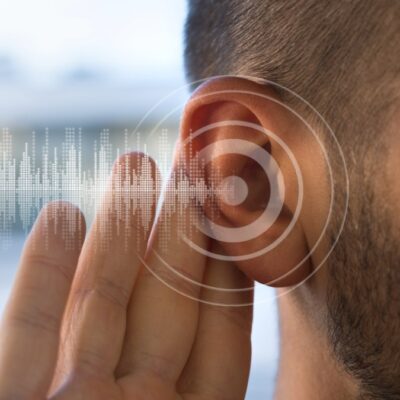 An annual audiogram does much more than satisfy an OSHA requirement. It serves as an early warning system that helps employers identify hearing changes before they become permanent. Because noise-induced hearing loss develops gradually, employees often do not notice a problem until significant damage has already occurred. Annual hearing tests make it possible to detect these changes early and take action to protect an employee’s hearing.
Detects Hearing Changes Early
One of the primary purposes of an annual audiogram is to identify small changes in hearing that may indicate the beginning of noise-induced hearing loss. By comparing each year’s results to the employee’s baseline audiogram, hearing professionals can detect shifts in hearing thresholds that might otherwise go unnoticed. Early detection allows employers to investigate workplace noise exposure, evaluate hearing protection, and make improvements before hearing loss worsens.
Improves Workplace Safety
Good hearing is essential in many work environments. Employees rely on their hearing to communicate with coworkers, hear warning signals, respond to equipment alarms, and remain aware of their surroundings. An annual audiogram helps employers identify workers whose hearing may be changing, reducing the risk of communication errors and workplace accidents caused by undetected hearing loss.
Supports OSHA Compliance
For employers covered by OSHA’s Hearing Conservation Standard, annual audiograms are a required part of maintaining compliance. Providing yearly hearing tests demonstrates that an employer is actively monitoring employees who are exposed to hazardous workplace noise. Regular testing also creates documentation that may be needed during OSHA inspections or workplace safety audits.
Protects Employees for the Long Term
Occupational hearing loss is permanent, but it is also one of the most preventable workplace injuries. Annual audiograms help employers evaluate whether hearing conservation efforts are working and whether additional protective measures are needed. By monitoring hearing year after year, employers can better protect their workforce and help employees preserve their hearing throughout their careers.
What Happens During an Annual Audiogram?
An annual audiogram is a quick, painless hearing test that evaluates an employee’s hearing and compares the results to their baseline audiogram. Most annual audiograms take between 10 and 20 minutes to complete and can be performed at an audiology clinic or through a mobile on-site hearing testing program. The goal is to identify hearing changes as early as possible so employers can take appropriate action to protect their workforce.
While the exact process may vary slightly, most annual audiograms follow the same basic steps.
1. Employee History Review
Before testing begins, the hearing professional may ask the employee about any recent changes in hearing, tinnitus (ringing in the ears), ear pain, or significant noise exposure outside of work. This information helps provide important context when interpreting the test results.
2. Ear Examination
Next, the examiner performs a brief visual inspection of the ears using an otoscope. This allows the provider to identify conditions such as excessive earwax, inflammation, or other issues that could affect the accuracy of the hearing test.
3. Pure-Tone Hearing Test
The employee is then seated in a quiet testing booth or mobile audiometric testing unit and wears a pair of headphones. A series of tones at different frequencies and volumes are presented to each ear. The employee responds whenever a tone is heard, allowing the examiner to measure the softest sounds that can be detected at each frequency.
4. Results Compared to the Baseline Audiogram
After testing is complete, the annual audiogram is compared with the employee’s baseline audiogram. This comparison helps determine whether any measurable hearing changes have occurred since the employee entered the hearing conservation program. If a significant shift is detected, additional follow-up may be recommended.
5. Documentation and Follow-Up
Finally, the results are documented and added to the employee’s hearing conservation records. If the annual audiogram identifies a Standard Threshold Shift (STS) or another significant change in hearing, employers may need to review hearing protection, provide additional training, or arrange further evaluation as required by OSHA.
By following this process every year, employers can identify hearing changes early, improve the effectiveness of their hearing conservation program, and help prevent permanent occupational hearing loss.
What Is a Standard Threshold Shift (STS)?
A Standard Threshold Shift (STS) is a measurable change in an employee’s hearing that may indicate the early stages of noise-induced hearing loss. One of the primary purposes of an annual audiogram is to identify these changes before they become severe enough to affect communication, workplace safety, or quality of life.
According to OSHA, a Standard Threshold Shift occurs when an employee experiences an average hearing change of 10 decibels (dB) or more at the 2,000, 3,000, and 4,000 Hertz (Hz) frequencies in either ear when compared to the employee’s baseline audiogram. These frequencies are particularly vulnerable to damage caused by long-term exposure to hazardous workplace noise.
Identifying an STS does not necessarily mean an employee has significant hearing loss. Instead, it serves as an early warning that hearing may be changing. Detecting these changes early allows employers to evaluate their hearing conservation program and take steps to prevent additional damage.
When an annual audiogram identifies a Standard Threshold Shift, employers have several responsibilities under OSHA’s Hearing Conservation Standard. These may include:
- Notifying the employee of the hearing shift in writing.
- Evaluating the effectiveness and fit of the employee’s hearing protection.
- Providing additional training on proper hearing protection use.
- Refitting or replacing hearing protection when necessary.
- Arranging additional medical evaluation if appropriate.
An STS can also indicate that workplace noise controls should be reviewed. If multiple employees experience hearing shifts, employers may need to evaluate engineering controls, administrative controls, or other measures to reduce overall noise exposure.
Because occupational hearing loss is permanent, identifying a Standard Threshold Shift during an annual audiogram gives employers an opportunity to intervene before additional hearing damage occurs. Regular monitoring, proper hearing protection, and timely follow-up are essential components of a successful hearing conservation program.
Are Annual Audiograms Required by OSHA?
 Yes. Annual audiograms are required by OSHA for employees who are enrolled in a Hearing Conservation Program due to hazardous workplace noise exposure. Under OSHA’s Occupational Noise Exposure Standard (29 CFR 1910.95), employers must provide annual hearing tests for employees whose noise exposure equals or exceeds an 8-hour time-weighted average (TWA) of 85 decibels.
The annual audiogram is one component of OSHA’s broader Hearing Conservation Program. In addition to yearly hearing testing, employers are responsible for:
- Monitoring workplace noise levels.
- Establishing a baseline audiogram for each affected employee.
- Providing appropriate hearing protection at no cost.
- Training employees on the effects of noise exposure and the proper use of hearing protection.
- Maintaining audiometric testing and noise exposure records.
- Taking appropriate follow-up action when a Standard Threshold Shift (STS) is identified.
Employers should also remember that an annual audiogram alone does not satisfy OSHA’s requirements. Hearing testing is only one part of a comprehensive hearing conservation program designed to prevent occupational hearing loss and protect employees working in high-noise environments.
Failure to provide required annual audiograms can result in OSHA citations, financial penalties, and increased liability if employees develop work-related hearing loss. More importantly, missing annual hearing tests may delay the detection of hearing changes, reducing the opportunity to prevent permanent damage.
If you’re looking for a detailed explanation of employer responsibilities, testing schedules, recordkeeping requirements, and OSHA compliance, be sure to read our guide on OSHA Hearing Test Requirements Explained for Employers.
Mobile Annual Audiograms for Employers
Scheduling annual hearing tests for an entire workforce can be challenging, especially when employees work multiple shifts or at different job sites. That’s why many employers choose mobile annual audiograms. Instead of sending employees to an off-site clinic, a mobile testing unit brings professional audiometric testing directly to the workplace.
On-site annual audiograms minimize disruptions to daily operations by allowing employees to complete their hearing tests during the workday. This reduces travel time, decreases lost productivity, and makes it easier for employers to maintain consistent testing schedules. As a result, more employees complete their required annual audiograms on time, helping employers stay compliant with OSHA’s Hearing Conservation Standard.
Mobile testing also simplifies program management. Experienced providers can schedule employees efficiently, perform testing using calibrated equipment, and maintain accurate audiometric records. When hearing changes are identified, employers receive timely documentation that supports follow-up actions and ongoing compliance efforts.
For organizations with multiple facilities or large workforces, mobile annual audiograms provide a convenient and cost-effective solution. Testing can often be completed in a single visit, allowing employers to meet regulatory requirements without interrupting normal business operations.
At Cecil Audiology, we provide professional mobile annual audiograms for employers throughout Illinois and the surrounding region. Our licensed audiologists bring OSHA-compliant hearing testing directly to your workplace, making it easier to protect your employees while maintaining a successful hearing conservation program. From scheduling and testing to documentation and record management, we help employers streamline the annual audiogram process from start to finish.
Final Thoughts on Annual Audiograms
An annual audiogram is one of the most effective tools for preventing occupational hearing loss. By monitoring employees’ hearing year after year, employers can identify early changes, evaluate the effectiveness of their hearing conservation program, and take action before permanent damage occurs. Regular hearing testing not only supports OSHA compliance but also demonstrates a commitment to employee health, safety, and long-term well-being.
Whether your organization employs a small team or manages multiple facilities, providing annual audiograms helps reduce risk, improve workplace safety, and create a safer work environment for everyone. When hearing changes are detected early, employers have the opportunity to reinforce hearing protection practices, address workplace noise hazards, and help preserve their employees’ hearing throughout their careers.
At Cecil Audiology, we make annual audiograms simple and convenient through professional mobile hearing testing services. Our licensed audiologists bring OSHA-compliant audiometric testing directly to your workplace, minimizing employee downtime while providing accurate testing, detailed documentation, and dependable support for your hearing conservation program.
Need to schedule annual audiograms for your employees? Contact Cecil Audiology today to learn how our mobile hearing testing services can help you protect your workforce and maintain OSHA compliance.
About the Author
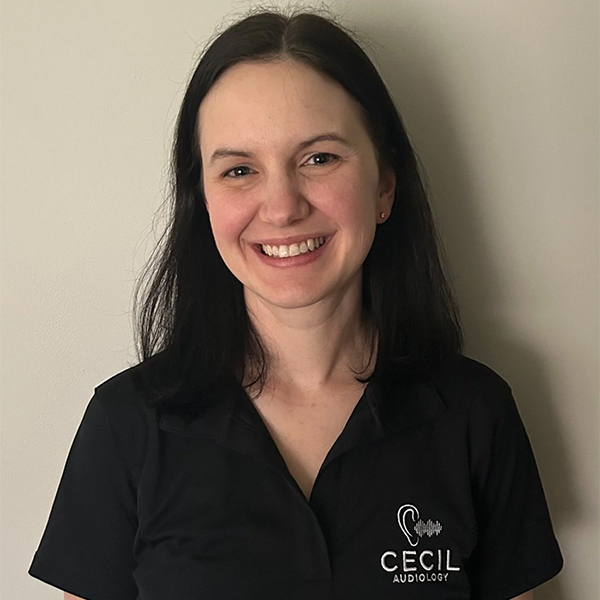
Allison Cecil is a Doctor of Audiology and co-founder of Cecil Audiology, bringing extensive experience in clinical and occupational hearing health. Guided by a commitment to patient care, accuracy, and education, Allison focuses on protecting hearing and helping individuals understand their hearing health with confidence.
After working closely with patients and employers, Allison saw the need for accessible, compliant, and reliable hearing testing—especially in occupational and industrial settings. Through Cecil Audiology, her mission is to deliver clear guidance, precise testing, and thoughtful care that supports long-term hearing conservation and informed decision-making.