
Why OSHA Hearing Test Requirements Matter
 Occupational noise exposure is one of the most widespread workplace health risks in the United States. When employees are routinely exposed to elevated noise levels, the risk of permanent hearing damage increases significantly. To address this, the Occupational Safety and Health Administration established specific regulations under the Occupational Noise Exposure Standard (29 CFR 1910.95). These regulations outline when employers must implement hearing conservation measures, including audiometric testing.
Preventing Irreversible Occupational Hearing Loss
OSHA Hearing Test Requirements exist because occupational hearing loss is both irreversible and preventable. Unlike many workplace injuries, hearing damage often occurs gradually. Employees may not notice changes until communication becomes difficult, warning signals are missed, or safety is compromised. Regular audiometric testing provides an objective way to identify early shifts in hearing thresholds before more serious loss develops.
For employers, compliance plays an important role in maintaining a safe and well-managed work environment. Hearing conservation requirements are designed to:
- Identify hazardous noise exposure through monitoring
- Establish baseline hearing levels for exposed employees
- Detect measurable changes in hearing over time
- Prompt corrective action when hearing shifts occur
- Maintain documentation demonstrating regulatory compliance
Meeting these requirements helps ensure that workplace risks are being actively evaluated and managed. It also creates a structured process for protecting employees whose job duties place them in higher-noise environments such as manufacturing, construction, utilities, transportation, and industrial operations.
Beyond regulatory obligations, consistent compliance supports overall workplace safety. Hearing loss can reduce situational awareness, interfere with communication among team members, and increase the likelihood of accident, particularly in environments where verbal instructions, alarms, or equipment signals are critical.
Understanding OSHA Hearing Test Requirements allows employers to approach compliance systematically rather than reactively. When noise exposure reaches OSHA’s defined action level, hearing testing becomes part of a broader hearing conservation program that includes monitoring, protection, training, and recordkeeping.
Below we explain these requirements in clear terms. What testing must be provided, how results are evaluated, and what documentation must be maintained so employers can better understand their responsibilities under federal workplace safety regulations.
What Triggers OSHA Hearing Test Requirements?
OSHA Hearing Test Requirements apply when employees are exposed to workplace noise at or above 85 decibels (dB), measured as an 8-hour time-weighted average (TWA). OSHA defines this threshold as the “action level,” and once exposure reaches or exceeds it, employers must take specific compliance steps. The 8-hour TWA accounts for varying noise levels throughout a shift and calculates an average exposure over the course of a standard workday.
If employee exposure meets or exceeds the 85 dB action level, enrollment in a hearing conservation program, including audiometric testing, becomes mandatory under federal regulation. This requirement applies regardless of industry size and is based solely on measured noise exposure. Identifying whether your workplace meets this threshold typically requires formal noise monitoring to accurately assess employee risk.
What is Required Under OSHA’s Hearing Conservation Standard?

Under OSHA’s Occupational Noise Exposure Standard (29 CFR 1910.95), the Occupational Safety and Health Administration requires employers to establish and maintain a comprehensive Hearing Conservation Program when their workers are exposed at or above the 85 dB action level.
Employers must do more than provide annual hearing tests. They must implement a structured system that identifies risk, prevents hearing loss, and documents compliance. Each required component works together to reduce long-term occupational noise damage and demonstrate regulatory adherence.
Below is a breakdown of what the standard requires.
Noise Monitoring
Employers must evaluate workplace noise exposure to determine whether employees meet or exceed the 85 dB 8-hour time-weighted average (TWA) action level. Monitoring may involve area sampling or personal dosimetry, depending on job tasks and variability of noise levels. If exposure levels change due to new equipment, processes, or facility modifications, additional monitoring may be required. Employees must also be given access to the monitoring results.
Audiometric (Hearing) Testing
Audiometric testing is required for all employees exposed at or above the action level. This includes:
- A baseline audiogram
- Annual follow-up audiograms
- Evaluation of a results for Standard Threshold Shifts (STS)
Testing must be provided at no cost to employees and performed by qualified professionals or certified technicians. The purpose is to detect early signs of hearing change and trigger protective interventions when necessary.
Hearing Protection
Employers must provide appropriate hearing protectors to employees exposed at or above 85 dB TWA. Protectors must be made available at no cost and offered in a variety of suitable types and sizes. If an employee experiences a Standard Threshold Shift, hearing protection use becomes mandatory. Employers are also responsible for ensuring proper fit and effectiveness.
Employee Training
Annual training is required for all employees enrolled in the hearing conservation program. Training must cover:
- The Effects of noise on hearing
- The purpose and advantages of hearing protection
- Instructions on proper fitting, use, and care
- The purpose of audiometric testing
Education is a key compliance element and supports employee participation in protective measures.
Recordkeeping
Employers must maintain detailed records related to:
- Noise exposure measurements
- Audiometric test results
- Calibration and testing documentation
Audiometric records must be retained for the duration of the employee’s employment. Proper documentation is critical in demonstrating compliance during inspections or audits.
Together, these elements form the foundation of OSHA’s Hearing Conservation Standard. While audiometric testing is central to the program, it functions as one part of a broader compliance framework designed to protect employees and reduce preventable occupational hearing loss.
Audiometric Testing: What Employers Must Provide
Baseline Audiogram
Employers must provide a baseline audiogram within six months of an employee’s first exposure to noise at or above the 85 dB 8-hour time-weighted average. This initial test establishes the employee’s reference hearing level against which all future audiograms are compared. To ensure accuracy, the employee must avoid workplace noise exposure for at least 14 hours prior to testing, unless appropriate hearing protection is worn during that period. The baseline audiogram is critical because it allows employers to detect measurable changes in hearing over time. Without an accurate baseline, it becomes difficult to determine whether hearing loss is occupationally related or when changes first occurred.
Annual Audiograms
After completing the baseline audiogram, employers must provide annual hearing tests to employees who remain exposed at or above the action level. Employers must provide these tests at no cost and ensure a qualified professional or certified technician administers them in accordance with regulatory standards. Annual audiograms serve as an early detection tool, identifying small shifts in hearing thresholds before significant or permanent loss develops. By comparing each year’s results to the established baseline, employers can determine whether workplace noise controls and hearing protection measures are effective. Consistent annual testing is a central component of an ongoing hearing conservation program.
Standard Threshold Shift (STS)
A Standard Threshold Shift (STS) occurs when an employee experiences a change in hearing threshold averaging 10 decibels or more at 2,000, 3,000, and 4,000 Hertz in either ear compared to the baseline audiogram. When an STS is identified, OSHA requires employers to notify the affected employee in writing within 21 days of determination. Employers must also evaluate the adequacy of the employee’s hearing protection and provide refitting, retraining, or alternative protection if necessary. In some cases, additional follow-up testing or medical evaluation may be appropriate. All findings and corrective actions must be properly documented to maintain compliance and demonstrate appropriate response.
Who Can Perform OSHA-Complaint Hearing Tests?

Under the Occupational Noise Exposure Standard, the Occupational Safety and Health Administration requires qualified personnel to conduct audiometric testing to ensure accuracy, reliability, and regulatory compliance. OSHA defines specific categories of professionals who may administer these tests. These requirements ensure that providers perform testing according to accepted clinical and technical standards and evaluate results appropriately.
OSHA allows audiometric testing to be performed by:
- A licensed audiologist
- A physician
- An otolaryngologist
- A certified technician under professional supervision
Certified technicians must operate under the supervision of an audiologist, physician, or otolaryngologist, and testing equipment must meet OSHA calibration and testing environment standards. In addition to proper credentials, providers must follow established protocols for test administration, record documentation, and result review. Ensuring that qualified professionals conduct audiometric testing helps maintain the integrity of baseline comparisons and annual evaluations.
Recordkeeping Requirements for Employers
Recordkeeping is a central component of OSHA’s Hearing Conservation Standard. Documentation serves as evidence that employers are actively monitoring noise exposure, conducting required testing, and responding appropriately to identified hearing shifts. During an OSHA inspection, incomplete or missing records are among the most common compliance issues cited.
Employers must maintain:
- Noise exposure measurements
- Audiometric test results
- Documentation of STS findings
- Training records
Audiometric test records must be retained for the duration of the employee’s employment. Noise exposure measurement records must also be preserved according to regulatory timelines. Records must include key information such as employee identification, test dates, examiner credentials, equipment calibration details, and test results. Maintaining organized and accessible documentation not only supports regulatory compliance but also provides a clear history of the employer’s efforts to protect workers from occupational hearing loss.
Common Employer Mistakes with OSHA Hearing Test Requirements
 Many employers unintentionally fall out of compliance with OSHA Hearing Test Requirements due to administrative oversights or misunderstandings of the standard. Common issues include missing annual audiogram deadlines, failing to establish a timely baseline test for newly exposed employees, and not retaining required records for the duration of employment.
Some employers neglect to provide written notification when they identify a Standard Threshold Shift (STS), or they fail to reassess the adequacy of hearing protection after the shift occurs.
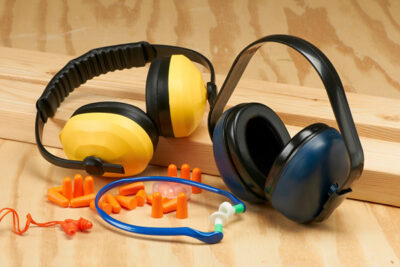
Another common misconception is that distributing earplugs alone satisfies OSHA requirements, when employers must implement and maintain a comprehensive hearing conservation program. Compliance involves coordinated monitoring, testing, training, follow-up, and documentation not just protective equipment.
What Happens If You Don’t Comply?
When employers fail to meet OSHA Hearing Test Requirements, they risk regulatory citations and financial penalties, especially if inspectors identify violations during an inspection or after a workplace complaint. Beyond direct fines, non-compliance can increase workers’ compensation claims when employees document occupational hearing loss without evidence of an active hearing conservation program.
Employers also assume legal liability when they do not perform required monitoring or follow-up actions. Compliance failures can damage workplace morale and harm an organization’s reputation, particularly in industries that closely evaluate safety performance. Employers who address requirements proactively reduce costs and disruption compared to correcting deficiencies after enforcement action.
How Mobile Hearing Testing Helps Employers Stay Compliant
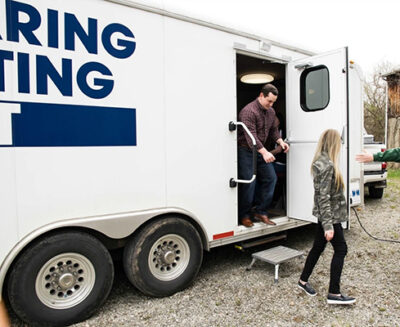 Mobile hearing testing can support compliance by making it easier to meet OSHA’s scheduling and documentation requirements. On-site testing reduces employee downtime by eliminating travel to off-site clinics and often increases participation rates because testing is completed during the workday. Coordinated scheduling simplifies administration for safety managers and human resources personnel, particularly in larger or multi-shift operations.
Mobile programs can also provide centralized record management and immediate documentation of completed audiograms, helping employers maintain organized compliance files. When properly administered, on-site testing integrates efficiently into a broader hearing conservation program while minimizing operational disruption.
Final Thoughts: Protecting Your Employees and Your Business
OSHA Hearing Test Requirements go far beyond regulatory checkboxes; they establish structured safeguards that prevent permanent occupational hearing loss and promote long-term workplace safety. Compliance begins with recognizing the 85 dB action level and implementing a comprehensive program that integrates noise monitoring, audiometric testing, and employee training. By focusing on the core requirements, such as establishing accurate Baseline Audiograms and conducting Annual Audiograms to detect a Standard Threshold Shift (STS), employers can move from reactive troubleshooting to a proactive culture of safety.
A well-managed hearing conservation program not only ensures you remain defensible in the event of an audit but also strengthens your overall risk management strategy. Services like mobile audiometric testing streamline this process by improving participation and simplifying the complex recordkeeping required by law. At Cecil Audiology, we help employers bridge the gap between complex regulations and daily operations through professional documentation support and program guidance. When you approach these requirements as an essential part of your safety strategy, you protect your workforce from preventable injury and your organization from costly claims.
About the Author
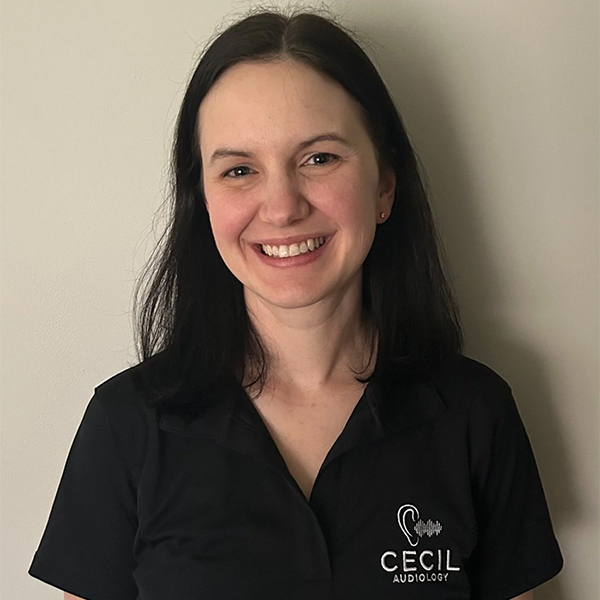
Allison Cecil is a Doctor of Audiology and co-founder of Cecil Audiology, bringing extensive experience in clinical and occupational hearing health. Guided by a commitment to patient care, accuracy, and education, Allison focuses on protecting hearing and helping individuals understand their hearing health with confidence.
After working closely with patients and employers, Allison saw the need for accessible, compliant, and reliable hearing testing—especially in occupational and industrial settings. Through Cecil Audiology, her mission is to deliver clear guidance, precise testing, and thoughtful care that supports long-term hearing conservation and informed decision-making.