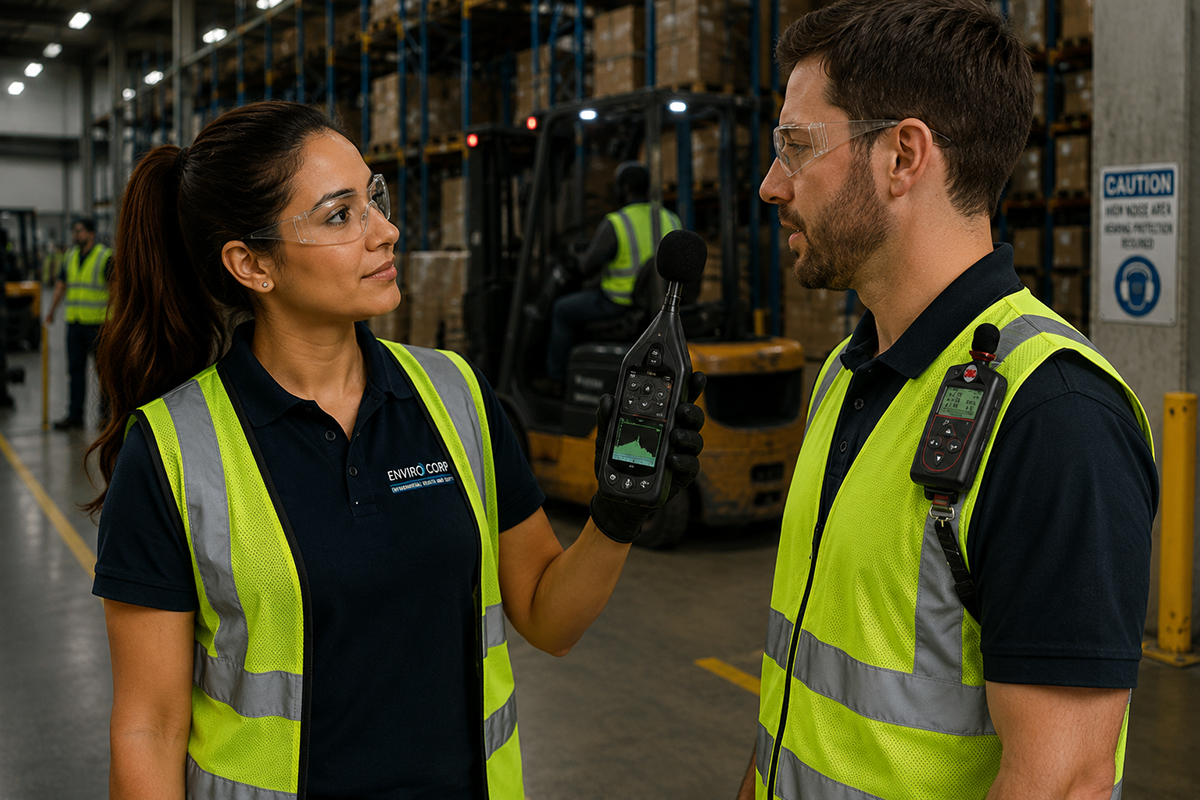
Cover Photo Credit: Enviro Corp
Introduction
Personal noise dosimetry helps employers understand how much noise individual employees may experience during a normal shift. For safety managers, HR teams, and operations leaders, that information can support practical hearing conservation decisions.
A sound level reading in one area of a facility can be helpful, but it may not tell the full story. Employees move between workstations. Production schedules change. Equipment cycles on and off. Some tasks create short bursts of high noise, while others create steady exposure throughout the day.
That is where personal noise dosimetry can be useful. It follows the employee’s actual workday instead of measuring only one fixed location. Used with a broader hearing conservation plan, dosimetry can help employers decide when noise controls, hearing protection, audiometric testing, training, and records deserve closer attention.
Cecil Audiology works with industrial and employer teams across Ohio, West Virginia, and nearby Appalachian service areas. The goal is not to turn every noise question into a legal conclusion. The goal is to help employers gather useful information, ask better program questions, and coordinate hearing conservation support more confidently.
What personal noise dosimetry measures
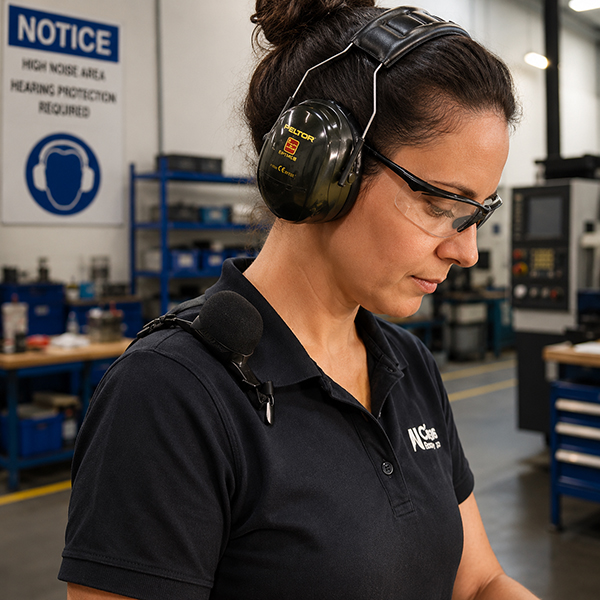
Photo Credit: Enviro Corp
Personal noise dosimetry uses a small device, usually worn on the employee’s shoulder or near the ear, to estimate the worker’s noise exposure over time. Instead of taking one quick reading, the dosimeter records exposure during the work period being evaluated.
That can help an employer understand:
- How exposure changes during a full shift.
- Whether certain job tasks or equipment cycles create higher noise levels.
- Which job classifications may need closer review.
- Whether area readings alone are missing employee-specific exposure patterns.
- How noise exposure may connect to hearing conservation program decisions.
This is different from a simple spot check. A spot reading can show noise at one place and one moment. Personal dosimetry is more employee-centered. It can be especially helpful when workers rotate tasks, move through several departments, or work near changing production conditions.
The NIOSH occupational noise and hearing loss prevention resources explain why workplace noise remains an important occupational health issue. For employers, dosimetry is one way to turn that broad risk into more specific workplace information.
When employers may consider dosimetry
Employers often consider personal noise dosimetry when they need more detail than a general workplace noise survey can provide. It can be a good fit when the question is not just “Is this area loud?” but “What are employees actually exposed to while doing this job?”
Common situations include:
- Employees split time between loud and quieter areas.
- Noise varies by task, machine cycle, production line, or shift.
- A facility has added new equipment or changed processes.
- Supervisors are unsure which employees should be included in a hearing conservation program.
- Safety teams want data to support hearing protection or testing decisions.
- A mining, manufacturing, fabrication, or processing environment needs a more job-specific exposure review.
Dosimetry can also help when a company has several similar roles but different exposure patterns. For example, one operator may stay near a noisy process most of the day, while another may only enter that area for short periods. A single area reading may not capture that difference well.
For mining and heavy-industry employers, NIOSH mining hearing loss prevention provides useful context on noise-related hearing risk in those environments. Rules and program expectations can vary by industry, so employers should use reliable data and qualified guidance when making program decisions.
How dosimetry supports hearing conservation decisions
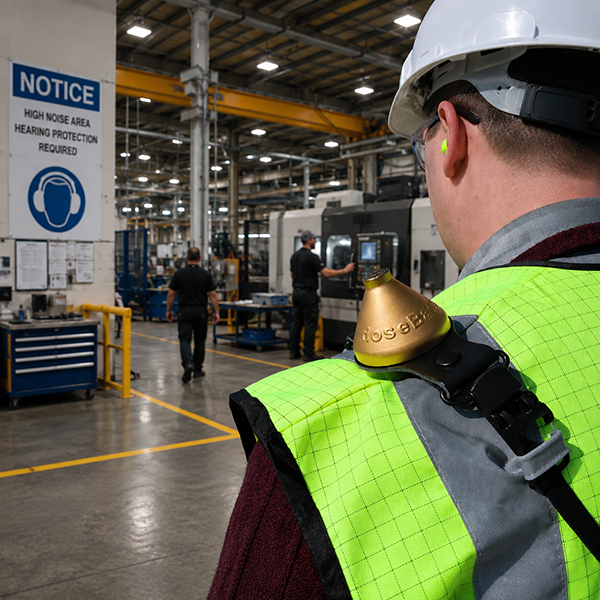
Photo Credit: Enviro Corp
Personal noise dosimetry is most useful when employers connect the results to next steps. The numbers should not sit in a file with no follow-up. They should help safety and management teams decide what needs review.
Depending on the results and the employer’s requirements, follow-up questions may include:
- Should certain employees be included in audiometric testing?
- Does the facility need more consistent hearing protection use in specific roles?
- Are engineering or administrative controls worth evaluating?
- Should training emphasize certain tasks, departments, or equipment?
- Are baseline and annual audiograms being scheduled for the right employee groups?
- Are records organized in a way that supports future program review?
This is where dosimetry and audiometric testing work together. Noise exposure information helps employers identify who may need hearing conservation attention. Audiometric testing helps track employee hearing over time when testing is required or appropriate for the program.
Cecil Audiology’s mobile on-site hearing testing services can help employers coordinate testing around shifts, departments, and production schedules. That can make the hearing conservation process easier to manage, especially for facilities with multiple crews or limited downtime.
What employers should plan before testing
Good dosimetry planning starts before anyone wears a monitor. Employers should think through which jobs, departments, and shifts need to be represented. A narrow sample may miss important exposure patterns.
Before a dosimetry project, consider:
- Which job roles have the highest suspected noise exposure.
- Whether day, night, or weekend shifts differ.
- Which equipment or processes create intermittent high noise.
- Whether employees rotate between areas during the shift.
- How seasonal or production changes affect the workday.
- Who will explain the process to employees.
- How results will be reviewed and stored.
Employee communication matters. Workers may worry that a dosimeter is being used to judge performance. A simple explanation can help: the device is there to measure noise exposure during normal work, not to track productivity.
It also helps to coordinate dosimetry with the broader hearing conservation calendar. If results show that certain employee groups need testing, training, or follow-up, the company can plan those next steps instead of reacting at the last minute.
What dosimetry does not do by itself
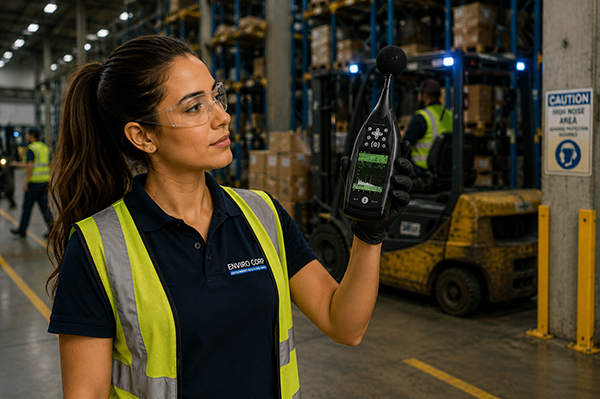
Photo Credit: Enviro Corp
Personal noise dosimetry is a measurement tool. It does not, by itself, create a complete hearing conservation program. It also does not replace the need for sound program decisions, employee training, recordkeeping, or qualified review.
Employers should avoid treating one dosimetry result as the final answer forever. Noise exposure can change when equipment, production volume, staffing, materials, maintenance, or work practices change. A facility that was reviewed last year may need another look after a major process change.
Dosimetry also should not be used as a shortcut for employee hearing follow-up. If employees are part of a hearing conservation program, audiometric testing and recordkeeping still matter. The Council for Accreditation in Occupational Hearing Conservation is one industry resource connected to occupational hearing conservation training and practices.
The safest approach is to treat dosimetry as one piece of a larger program. It can clarify exposure patterns, but employers still need to decide how those findings fit into training, protection, testing, and documentation.
Connecting dosimetry to on-site hearing testing
Once employers understand exposure patterns, the next challenge is execution. Which employees need testing? How will the schedule work? Who reviews the audiograms? How will records be stored and explained?
Cecil Audiology focuses on employer-based hearing conservation support, including mobile and boothless testing options for industrial teams. That matters because hearing testing can be difficult to coordinate when employees work different shifts or cannot easily leave the facility.
For employers in manufacturing, mining, energy, construction-related operations, and other loud environments, a coordinated approach can reduce disruption. It can also help safety managers keep testing, review, and employee communication in one organized process.
Employers can review Cecil Audiology’s industries served to see how on-site testing fits different workplace environments.
Practical questions for safety managers
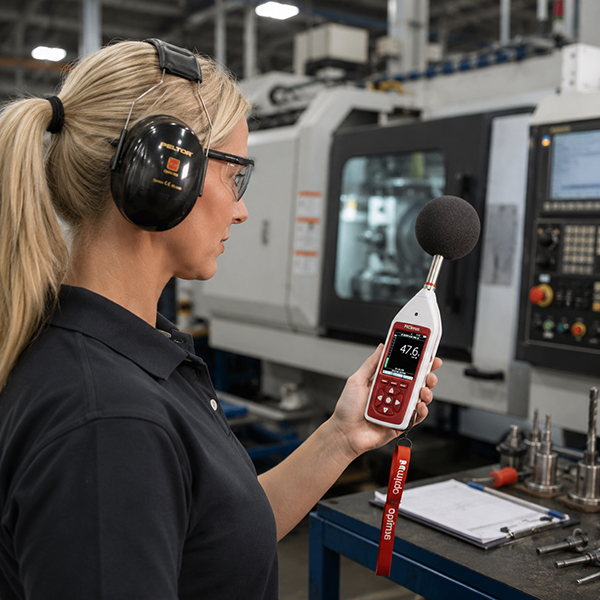
Photo Credit: Enviro Corp
If your team is deciding whether personal noise dosimetry belongs in the next program review, start with a few practical questions.
Ask:
- Do employees move through different noise areas during the day?
- Has production changed since the last exposure review?
- Are there job roles where hearing protection use is inconsistent or uncertain?
- Do supervisors know which employees should be included in testing?
- Are noise-related records easy to find and understand?
- Are annual testing schedules aligned with actual exposure concerns?
If the answer is “we are not sure” to several of these questions, dosimetry may be worth discussing. The result can give your team a clearer starting point for hearing conservation planning.
Conclusion
Personal noise dosimetry can help employers move from guesswork to better workplace noise information. It is especially useful when employees rotate, shifts vary, or area readings do not explain what workers experience during a full day.
For industrial employers, the value comes from using that information well. Dosimetry can support decisions about hearing protection, training, audiometric testing, and recordkeeping, but it works best as part of a larger hearing conservation process.
If your company is reviewing noise exposure or planning on-site hearing testing, Cecil Audiology can help you think through the next step. You can request a quote to start a practical conversation about your workplace, schedule, and hearing conservation needs.
FAQs
What is personal noise dosimetry?
Personal noise dosimetry measures an employee’s noise exposure over a work period using a small worn device. It helps employers understand what a worker may experience during real tasks, movement, and equipment changes instead of relying only on one fixed-area reading.
How is personal noise dosimetry different from a sound level meter reading?
A sound level meter reading usually measures noise at one location and moment. Personal noise dosimetry follows an employee through the work period being evaluated. That can give employers a better view of exposure when workers move between areas or perform varied tasks.
Does dosimetry tell employers who needs hearing testing?
Dosimetry can help employers identify job roles or employee groups that may need closer hearing conservation review. It should be considered with applicable requirements, work conditions, and qualified guidance. It is one input for testing, training, protection, and recordkeeping decisions.
Is personal noise dosimetry useful for mining employers?
Yes, it can be useful for mining and heavy-industry employers when job tasks and equipment create changing noise exposure. Mining employers should consider industry-specific requirements and use qualified support when connecting dosimetry results to hearing conservation decisions.
Can Cecil Audiology help after noise exposure concerns are identified?
Yes. Cecil Audiology provides mobile and on-site industrial hearing testing for employers. If dosimetry or other noise information shows that employee groups need audiometric testing, Cecil Audiology can help coordinate testing around shifts and workplace schedules.
About the Author
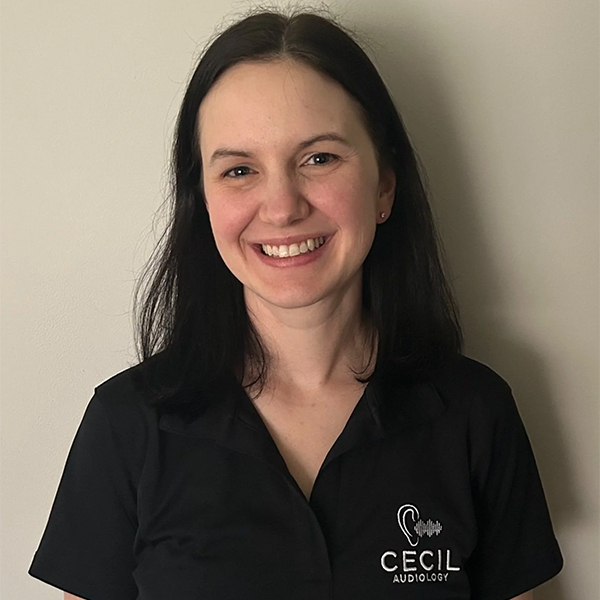
Allison Cecil is a Doctor of Audiology and co-founder of Cecil Audiology, bringing extensive experience in clinical and occupational hearing health. Guided by a commitment to patient care, accuracy, and education, Allison focuses on protecting hearing and helping individuals understand their hearing health with confidence.
After working closely with patients and employers, Allison saw the need for accessible, compliant, and reliable hearing testing—especially in occupational and industrial settings. Through Cecil Audiology, her mission is to deliver clear guidance, precise testing, and thoughtful care that supports long-term hearing conservation and informed decision-making.