
When employees complete annual hearing tests, most employers hope for a simple result: no major changes, no follow-up, and no new concerns. But sometimes an annual audiogram shows a standard threshold shift, often shortened to STS.
A standard threshold shift does not automatically mean an employer has done something wrong. It also does not always mean the employee has permanent occupational hearing loss. It does mean the result needs attention.
For employers, an STS is a signal to review the employee’s audiogram, confirm whether follow-up testing is needed, evaluate hearing protection, and make sure documentation is handled correctly. In industries with regular noise exposure, this process is a normal part of a well-managed hearing conservation program.
Understanding what an STS means can help safety managers, HR teams, and operations leaders respond calmly and consistently after annual testing.
What is a standard threshold shift?
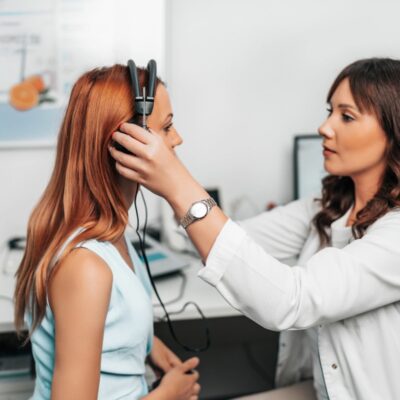 Under the OSHA occupational noise exposure standard, a standard threshold shift is a change in hearing threshold when compared with an employee’s baseline audiogram. OSHA defines an STS as an average change of 10 decibels or more at 2,000, 3,000, and 4,000 hertz in either ear.
That definition matters because those frequencies are important for speech understanding and workplace communication. If a change appears in that range, the employer needs to look at the result more closely.
The baseline audiogram is the employee’s reference point. Annual audiograms are compared against that baseline to see whether hearing has changed over time. Without a reliable baseline, it is much harder to tell whether a current result reflects a new shift, an old issue, or an inconsistent test.
An STS is not the same as a failed hearing test. It is a comparison result. The next step is to determine whether the shift is valid, persistent, work-related, or connected to another possible cause.
Why STS results matter for employers
A standard threshold shift gives employers a chance to catch hearing changes before they become a bigger problem. That is one of the main reasons annual audiometric testing exists.
For employers, STS results can affect several parts of a hearing conservation program:
- Employee notification and education
- Retesting and audiogram review
- Hearing protection fit and training
- Noise exposure review
- Recordkeeping decisions
- Follow-up with an audiologist, physician, or other qualified reviewer
The goal is not to panic over every shift. The goal is to have a clear process.
When an employer treats STS follow-up as part of the program rather than a surprise interruption, the response is easier to manage. The employee gets clearer information. The safety team has better documentation. The company can also spot patterns across departments, shifts, or job tasks.
How an STS is identified during annual testing
 Annual audiograms compare an employee’s current hearing thresholds with the baseline audiogram on file. This comparison may be done by a technician, but problem audiograms need review by an audiologist, otolaryngologist, or physician when required.
During the review, the testing provider looks for changes that meet the OSHA definition of a standard threshold shift. The reviewer may also consider whether the test conditions were valid. For example, the employee may need a retest if the first result seems inconsistent or if other factors may have affected the audiogram.
OSHA allows an employer to obtain a retest within 30 days when an annual audiogram shows a standard threshold shift. The employer may then consider the retest result as the annual audiogram.
This is one reason organized scheduling matters. If annual tests are treated as a one-day event with no follow-up plan, the 30-day retest window can create pressure. A testing provider that builds retests and audiogram review into the process can help employers avoid last-minute confusion.
What employers should do after an STS result
An STS result should trigger a practical checklist. The exact steps can depend on the employee’s exposure, the company’s program, and the reviewer’s determination, but employers should generally focus on the following items.
Confirm the result and review the audiogram
Start by confirming that the annual audiogram was valid and that the comparison to the baseline was handled correctly. Make sure the baseline audiogram, current audiogram, test room or boothless testing conditions, and equipment calibration records are available for review.
If a retest is appropriate, schedule it within the allowed follow-up window. A retest can help determine whether the shift persists or whether the first result may have been temporary or inconsistent.
Notify and educate the employee
Employees should understand what the result means in plain language. Avoid alarming language, but do not minimize the finding either.
A good conversation explains that an STS means the annual test showed a measurable change compared with the baseline. It should also explain any next steps, such as retesting, hearing protection review, or referral for additional evaluation.
Clear communication helps employees take hearing protection seriously. It also reduces confusion when the employee receives paperwork or is asked to complete a follow-up test.
Refit or retrain on hearing protection when needed
If a standard threshold shift occurs and a physician does not determine that it is unrelated to workplace noise, OSHA follow-up procedures may require action around hearing protectors.
Employees who were not using hearing protectors may need to be fitted, trained, and required to use them. Employees already using hearing protectors may need to be refitted, retrained, or provided protectors with greater attenuation if necessary.
This is a good time to look at real-world use, not just written policy. Are employees wearing hearing protection correctly? Are plugs inserted properly? Are muffs damaged or uncomfortable? Do workers remove protection to talk, answer radios, or perform certain tasks?
Small habits can affect noise exposure over a full shift.
Review noise exposure and job tasks

One STS result may be limited to one employee. Several STS results in the same department may point to a larger exposure issue.
Employers should look at the employee’s job duties, work area, shift, equipment, and hearing protection history. If production processes or equipment have changed, noise exposure monitoring may need another look.
This review can also help employers decide whether training needs to be refreshed across a department rather than only with one employee.
Document the follow-up
STS follow-up is partly a health and safety process and partly a documentation process. Employers should keep records of the audiograms, reviews, retests, employee notifications, training, hearing protection changes, and any referrals or recommendations.
Good records help the employer show that the result was taken seriously. They also make future annual comparisons easier because the testing provider can see what happened after the prior shift.
Does every STS become OSHA recordable?
No. A standard threshold shift and an OSHA-recordable hearing loss case are related, but they are not the same thing.
OSHA’s recordkeeping criteria for occupational hearing loss include additional factors. Under 1904.10, a case may be recordable when the employee has a work-related STS and the employee’s total hearing level is 25 decibels or more above audiometric zero, averaged at 2,000, 3,000, and 4,000 hertz in the same ear or ears as the STS.
Employers should not assume that every STS belongs on the OSHA 300 Log. They also should not ignore recordkeeping review when a shift appears. The better approach is to have the audiogram reviewed by a qualified professional and then apply the recordkeeping criteria carefully.
If your company has both OSHA and MSHA considerations, or if you work across multiple facilities, it is especially important to keep the review process consistent.
Common mistakes employers make with STS follow-up
Many STS problems come from process gaps rather than a lack of concern. Employers often want to do the right thing, but the details can get lost after test day.
Common mistakes include:
- Treating annual testing as complete before all STS reviews are finished
- Missing the retest window
- Failing to document employee notification
- Keeping outdated baseline records
- Not reviewing hearing protection fit after a shift
- Assuming an STS is automatically work-related or automatically unrelated
- Waiting until the next annual test to address a possible trend
A hearing conservation program works best when follow-up is built into the annual testing workflow. The test itself is only one piece. The review afterward is where employers learn whether action is needed.
How Cecil Audiology supports STS follow-up
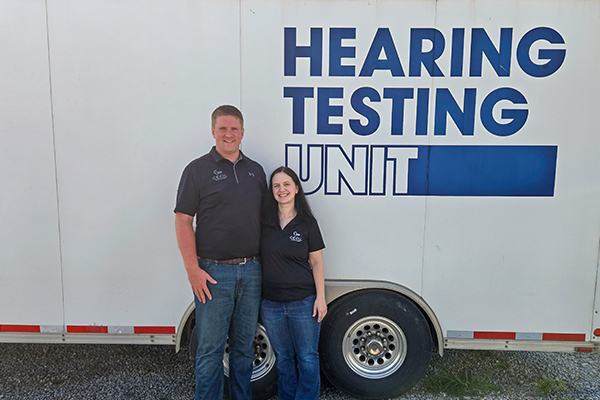 Cecil Audiology provides mobile and on-site hearing testing for industrial and manufacturing employers across Ohio, West Virginia, and select areas of Pennsylvania, Kentucky, Virginia, and Maryland. The testing process is designed around employer hearing conservation requirements, including audiogram review and STS follow-up.
Cecil Audiology’s on-site services include audiogram testing, employee result review, data storage, recordkeeping support, and in-house Doctor of Audiology review of audiograms. For employers who already test in-house or use another local testing option, hearing conservation program management can also help bring audiogram review and documentation into one consistent process.
That support matters when an STS appears. Employers need more than a spreadsheet of test results. They need to know which employees need follow-up, what documentation should be kept, and whether program changes may be appropriate.
Practical questions to ask after annual hearing tests
After each annual testing cycle, employers can use these questions to review STS follow-up:
- Were all current audiograms compared with the correct baseline?
- Were problem audiograms reviewed by the appropriate professional?
- Did any employee need a retest within 30 days?
- Were employees notified of results and next steps?
- Did any employee need refitting or retraining on hearing protection?
- Do any departments show repeated shifts or concerning trends?
- Are audiometric records stored in a way that supports future comparisons?
- Does the program need a broader OSHA or MSHA hearing program review?
These questions help move the program beyond basic compliance. They also help employers use annual testing as a prevention tool instead of a paperwork task.
Final thoughts
A standard threshold shift is a warning sign worth taking seriously, but it should not throw your team into confusion. With the right process, employers can confirm the result, communicate with the employee, review hearing protection, and keep records that support the hearing conservation program.
If your company needs help with annual audiograms, STS follow-up, or hearing conservation program review, Cecil Audiology can support your team with on-site hearing testing services built for industrial employers. To discuss testing for your facility or upcoming shifts, request a quote from Cecil Audiology.
FAQs
What does standard threshold shift mean?
A standard threshold shift means an employee’s hearing threshold changed compared with the baseline audiogram. OSHA defines it as an average change of 10 decibels or more at 2,000, 3,000, and 4,000 hertz in either ear.
Does an STS always mean occupational hearing loss?
No. An STS shows a measurable change compared with the baseline, but it does not automatically prove permanent or work-related hearing loss. The audiogram should be reviewed, and a retest may be appropriate when allowed.
How soon should an employer retest after an STS?
OSHA allows an employer to obtain a retest within 30 days when an annual audiogram shows a standard threshold shift. The retest can then be used as the annual audiogram.
Is every standard threshold shift OSHA recordable?
No. OSHA recordkeeping criteria for occupational hearing loss include additional requirements beyond the STS itself. Employers should review 1904.10 and work with a qualified reviewer before deciding whether a case is recordable.
Can mobile hearing testing help with STS follow-up?
Yes. Mobile hearing testing can make annual audiograms, retests, employee result review, and documentation easier to manage on-site. This is especially helpful for employers with multiple shifts, rural locations, or industrial worksites.
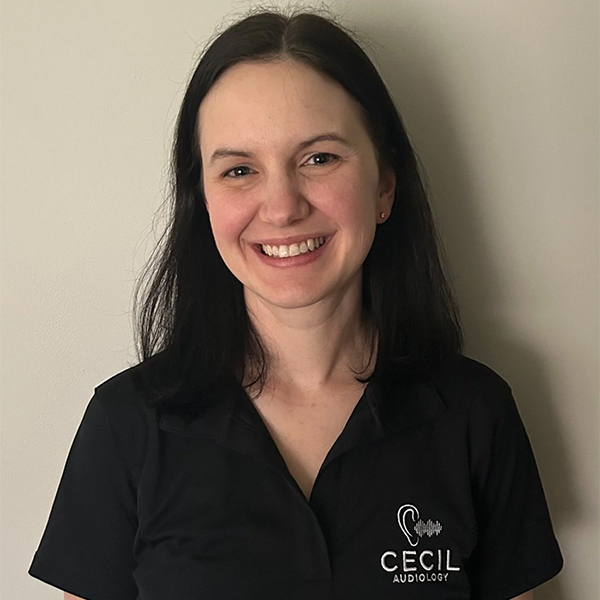
About the Author
Allison Cecil is a Doctor of Audiology and co-founder of Cecil Audiology, bringing extensive experience in clinical and occupational hearing health. Guided by a commitment to patient care, accuracy, and education, Allison focuses on protecting hearing and helping individuals understand their hearing health with confidence.
After working closely with patients and employers, Allison saw the need for accessible, compliant, and reliable hearing testing—especially in occupational and industrial settings. Through Cecil Audiology, her mission is to deliver clear guidance, precise testing, and thoughtful care that supports long-term hearing conservation and informed decision-making.